
MICE & Economics | Industry Insights
How the MICE Industry Drives GDP Growth in East & Central Africa
Spending multipliers, hotel occupancy, and the local supply chains that turn a single conference into an economy-wide event.
2026 Economic Growth MICE Tourism East Africa
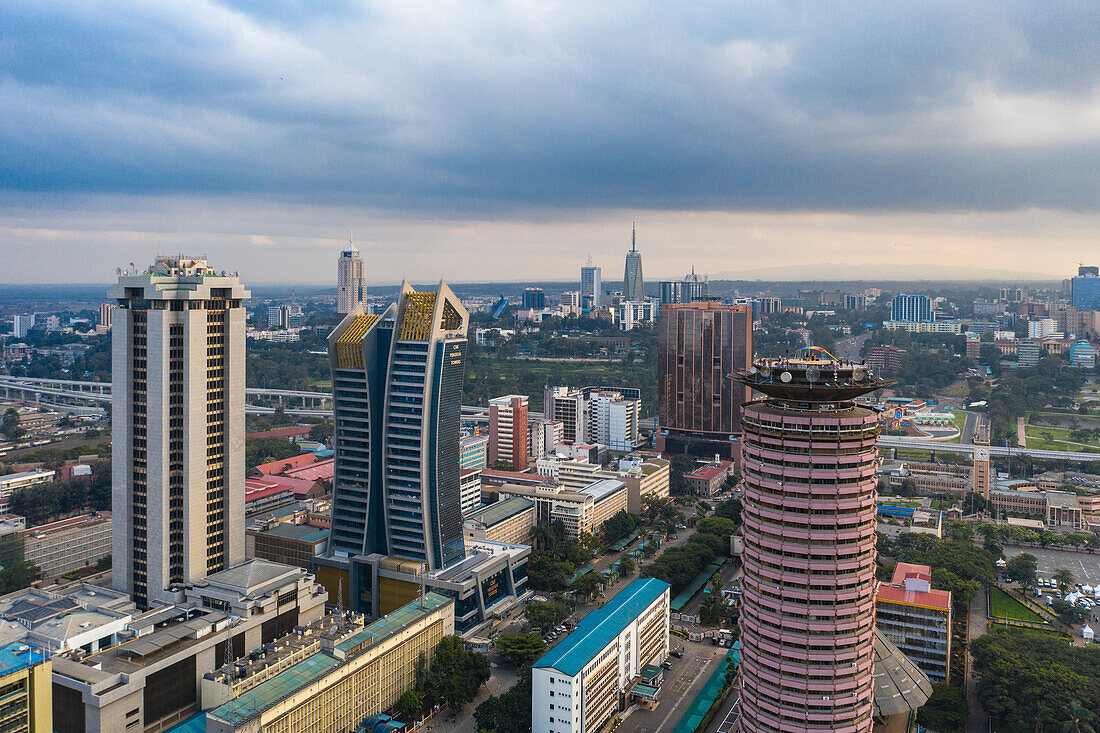
Kenyatta International Convention Centre, Nairobi

Nairobi's KICC — one of the venues anchoring East Africa's growing MICE economy.
When a conference lands in Nairobi or Kigali, the value it creates rarely stops at the venue door. A single delegation sets off a chain of spending; hotel rooms, meals, transport, décor, security — that ripples through the wider economy long after the closing keynote. That ripple effect is what makes MICE tourism one of the more closely watched growth levers in East and Central Africa today.
The Multiplier Effect — Why a Conference Dollar Isn't Just a Conference Dollar
Rwanda's Kigali Convention Centre offers one of the clearest illustrations of this in the region. Marking the venue's tenth anniversary in July 2026, its management stated that every dollar generated at the centre creates an estimated four to five dollars across the wider Rwandan economy — a multiplier that accounts for spending on accommodation, catering, transport, and the broader services layer that supports a large event.
Kigali Convention Centre, Rwanda

The Kigali Convention Centre — host to more than 5,000 events and 546,000 delegates since 2016.
The trajectory of Rwanda's MICE revenue shows how quickly this compounds nationally. The Rwanda Convention Bureau reported MICE earnings of roughly $38.5 million in 2019, rising to about $62.4 million in 2022 and $95 million in 2023, a 48% jump in a single year, and the highest figure recorded since the bureau's founding. Rwanda's stated ambition, presented at IMEX Frankfurt in 2026, is to reach $224 million in MICE revenue by 2028–2029.
"Every dollar generated at the Kigali Convention Centre creates between four and five dollars across Rwanda's wider economy."
— Radisson Blu Hotel & Kigali Convention Centre, 10th anniversary briefing, July 2026
$95M Rwanda MICE revenue, 2023 — from 160 events
4–5x Estimated multiplier per dollar spent at KCC
27% Share of Kenya's 2024 tourism arrivals from MICE
Hospitality Is Where the Numbers Show Up First
Hotel occupancy is usually the first sector to register a MICE calendar filling up. Kenya's Tourism Research Institute reported that room occupancy rose an estimated 19% between 2023 and 2024, with total bed-night occupancy climbing roughly 16% over the same period growth. The sector partly credits to conference and business-event demand alongside leisure travel. Business travel and events accounted for about 27% of Kenya's international tourism arrivals in 2024, a meaningful share for a sector that also anchors the country's safari and coastal tourism brand.
In Kigali, the pattern is similar but more concentrated: the Radisson Blu Hotel and Kigali Convention Centre alone has hosted more than 5,000 events and welcomed over 546,000 delegates between 2016 and 2026. Its single largest event, the 2019 International Conference on AIDS and STIs in Africa which drew roughly 9,000 delegates on its own, filling hotel capacity across the city rather than a single property.
Local Supply Chains — Where the Spending Actually Lands
The GDP case for MICE tourism ultimately rests on tourism's broader contribution to national output, since events tourism is typically reported within that total rather than broken out on its own. Kenya's travel and tourism sector of which MICE is a strategic pillar identified in national tourism policy is estimated to contribute close to 10% of GDP and to support well over a million jobs, per Kenya's Ministry of Tourism, Wildlife and Heritage and Investment promotion data.
What distinguishes MICE spending from typical leisure tourism is how far down the supply chain it reaches. Industry figures in Rwanda point to ride-hailing drivers, motorcycle taxi operators, small-scale traders, and craft vendors as direct beneficiaries whenever a major conference or summit comes to town, a trickle-down effect that event organisers and convention bureaus increasingly plan for rather than treat as incidental.
Motorcycle taxi (boda-boda) in Kigali, Rwanda

Ground transport is often the first informal sector to feel a busy conference calendar.
A Race Both Kenya and Rwanda Are Running Deliberately
What makes East and Central Africa notable in this space isn't a single breakout success story, it's that multiple governments now treat MICE as deliberate economic policy rather than a by-product of general tourism promotion. Rwanda built a dedicated convention bureau and a headline venue years before demand fully materialised, and is now scaling toward it. Kenya has folded MICE explicitly into its 2025–2030 National Tourism Strategy, alongside plans for expanded convention infrastructure such as the Kisumu Convention Centre. The International Congress and Convention Association has ranked Kigali among Africa's top cities for international meetings multiple times a signal that the region's investment in venues, connectivity, and event-readiness is translating into actual bookings, not just ambition.
What This Looks Like in Practice
EEO's Role: Growth Beyond the Venue
This is the thinking behind EEO's work organizing and marketing exhibitions and events across the region. Every conference, trade fair, or summit secured for Nairobi or the wider region is doing economic work well beyond its own budget line; filling hotel rooms, moving local transport, and putting money into the hands of vendors and service providers who never set foot inside the venue.
Treating event attraction, and the supply chains that support it, as genuine economic infrastructure is the case for investing in it deliberately the way Rwanda and Kenya both now are.
Bringing the Next Conference to East Africa?
EEO works with organizers, exhibitors, and venues across Kenya and the region to plan and execute events that put the local economy to work.
EEO
Exhibition & Events Organizers Limited Communication, Event Management & Expomarketing · Karen, Nairobi, Kenya
Sources: Kenya Tourism Research Institute — Annual Tourism Sector Performance Report 2024 · Kenya Ministry of Tourism, Wildlife & Heritage · InvestKenya · Rwanda Convention Bureau (public figures, 2019–2024) · Radisson Blu Hotel & Kigali Convention Centre, 10th anniversary briefing (July 2026) · Kenya National Tourism Strategy 2025–2030 (draft). The Kigali Convention Centre's multiplier figure is a venue-reported estimate rather than an independently audited statistic, verify current figures with the respective tourism boards before citing externally. Images sourced from Wikimedia Commons under free licenses.